
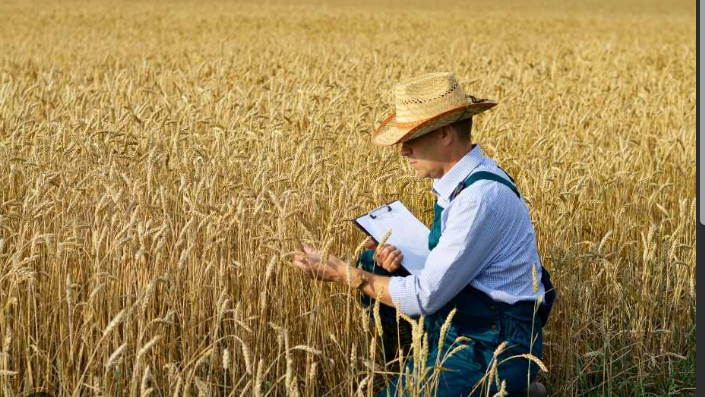
Why UK farming matters more than ever
Russia’s full‑scale invasion of Ukraine has turned agriculture from a “quiet” sector
into a core component of the UK’s national security and economic resilience.
Disruptions to global trade in grain, fertilisers and energy have exposed the
vulnerabilities of a country that produces only part of its own food and relies heavily
on imports for key inputs.
This shock hit just as the UK was already undergoing a double transition: moving out
of the EU’s Common Agricultural Policy into a new domestic support framework, and
shifting towards a more climate‑neutral, resource‑efficient model of food production.
The war has not changed the direction of travel, but it has significantly accelerated
the pace of this transition.
- Economic performance 2022–2025: high volatility, fragile profitability
Since 2022, UK farming has faced sharp swings in both revenues and costs.
In 2022, high world prices for grains and oilseeds following the invasion pushed
total income from farming in the UK up to close to record levels, with many
arable farms seeing strong headline revenues. At the same time, explosive
increases in fertiliser, fuel and feed costs eroded margins, particularly in
livestock sectors.
In 2023, markets moved into a correction phase. In England, total income from
farming fell by around one‑fifth year‑on‑year, with the value of crop output
dropping while input costs remained uncomfortably high. For many businesses,
this exposed how thin and fragile profitability had become even after a “good”
price year.
In 2024, revised statistics showed a rebound in aggregate farm income for the
UK, but much of this reflected updated estimates of how high fertiliser costs
had actually been in 2023. On the ground, the year was experienced less as a
boom and more as a period of adjustment: cutting waste, diversifying income
streams and paying closer attention to contracts and risk management.
In 2025, cereal and oilseed production remained relatively high in volume terms
but highly uneven. Wheat output rose thanks to increased planted area, even
though average yields were among the weakest of the past decade, while barley
volumes slipped to multi‑year lows. This underlined how exposed farm
performance is to extreme weather and climate variability.
Structurally, UK farmers receive a lower share of their gross receipts from public
support than the OECD average, leaving them more exposed to global market shocks
but also giving stronger incentives to improve productivity and market orientation.
- How the war in Ukraine reshaped UK farming
The war in Ukraine has not physically damaged UK farms, but it has profoundly altered
their operating environment.
First, it has destabilised global grain and feed markets. Ukraine and Russia are major
exporters of wheat, maize and oilseeds, as well as key suppliers of feed ingredients.
Export disruptions, port blockades and logistical risk have driven up feed prices,
hitting UK livestock producers in dairy, beef, sheep and poultry.
Second, fertiliser prices have surged. Russia, Belarus and other countries are critical
exporters of nitrogen and potash; sanctions, export controls and higher gas prices
have made fertiliser production significantly more expensive. Many UK farms have had
to choose between applying less fertiliser – and risking lower yields – or accepting
much tighter margins.
Third, the war has intensified debate around energy and food security. Strategic and
defence analysts increasingly frame farming as critical infrastructure – from local
supply chains to the country’s capacity to withstand future conflicts and systemic
shocks. This has shifted the political narrative: agricultural policy is being seen less as
a purely budgetary issue and more as an investment in resilience. - Policy response: from crisis management to strategic redesign
Government and industry responses have been evolving from short‑term firefighting to
a more structural redesign of the UK farming model.
An independent Farming Profitability Review, led by Baroness Batters, concluded that
farm profitability has been under sustained pressure for many years and set out
dozens of recommendations, from improving policy predictability to strengthening
farmers’ position in the supply chain. At its core, the review argues that productivity,
innovation and smarter use of natural resources must sit at the heart of future
agricultural strategy.
In response, government has announced a new Farming and Food Partnership Board,
additional funding for collaborative projects, and increased support for investment in
critical infrastructure such as water storage, glasshouses and storage facilities.
Analysis suggests that, if scaled effectively, such investment could generate
significant additional gross value added and support tens of thousands of jobs across
the food system.
The Sustainable Farming Incentive (SFI) has become a key tool for steering the
transition. The SFI26 package simplifies previous schemes by reducing the number of
actions, dialling back incentives for simply taking land out of production and focusing
support on practices that improve both nature and productivity – from soil health and
water management to climate resilience. The strategic signal is clear: the aim is no
longer “food or environment”, but “more food from better‑managed natural capital”.
- Market and societal signals: brand, fairness, data
Alongside policy change, markets and the public are also re‑evaluating the role of
farming.
Public support for British agriculture has reached record highs. Recent surveys show
that a strong majority of citizens have a positive view of domestic farming and believe
farmers are doing a good job in producing food. This creates an opportunity to develop
“Brand Britain” in food: a proposition that combines quality, safety and high
environmental standards to secure price premiums and export growth.
At the same time, tensions along the supply chain are rising. The Farming Profitability
Review highlights that fairness in the division of value between farmers, processors
and retailers is just as important for long‑term viability as the level of public subsidies.
Issues of price transparency, contract terms and risk‑sharing mechanisms are moving
to the centre of the policy debate.
Data is emerging as a strategic asset. Analysts argue that systematic “digitisation” of
UK agriculture – from soil mapping and carbon accounting to biodiversity metrics – is
essential for unlocking productivity gains and mobilising new forms of finance. Data is
no longer just a compliance tool; it is becoming an economic asset that can underpin
market premiums, green finance and innovation across the food system. - Strategic insights and recommendations for UK decision‑makers
Looking across 2022–2025, several strategic insights stand out for policymakers,
industry leaders and think tanks.
1)Treat agriculture as security infrastructure
Farming should be understood as part of the UK’s security architecture, not just a
small share of GDP. Policy needs to factor in risks from future wars, trade disruption
and energy shocks, and ensure that domestic production capacity and input supply
chains are robust.
2)Use the “war shock” as a transition accelerator
The war in Ukraine has accelerated an inevitable shift towards a more market‑driven,
technology‑enabled and environmentally aligned model of agriculture. Rather than
trying to restore the pre‑crisis status quo, policy should convert this shock into a
structural upgrade of the sector.
3)Design for dual profitability: economic and environmental
New support tools like SFI26 should be designed to lift financial profitability and
natural capital at the same time. That implies developing metrics and incentives that
capture both economic returns and environmental outcomes in a single performance
framework.
4)Rebalance power along the supply chain
The resilience of farming depends not only on public payments but also on trading
conditions with processors and retailers. Transparent pricing mechanisms,
fair‑dealing codes and better risk‑sharing instruments are needed to ensure farmers
capture a sustainable share of value.
5)Align tax and investment policy with productivity and resilience
Debates around agricultural tax reliefs, including inheritance tax, offer an opening to
shift incentives away from passive landholding towards investment in productivity,
innovation and environmental performance. Tax and capital allowances should reward
farms that actively build resilience.
6)Build an agricultural data ecosystem
The UK needs a coherent agricultural data ecosystem – common standards, platforms
and access rules – that allows farm, research and market data to be combined
securely. This would support better decision‑making on farm, unlock new financial
products and improve system‑wide risk management.
7)Invest in human capital and skills
Raising productivity and resilience depends on people as much as on capital. A
national skills agenda for agriculture – covering data literacy, robotics, risk
management and export capability – should sit alongside infrastructure and
innovation funding as a core policy priority.
Dr Liliia Voinycha
Associate Professor of Management, Stepan Gzhytskyi National University of Veterinary
Medicine and Biotechnologies of Lviv, Ukraine
Adviser, Society, War & Recovery Research Centre