
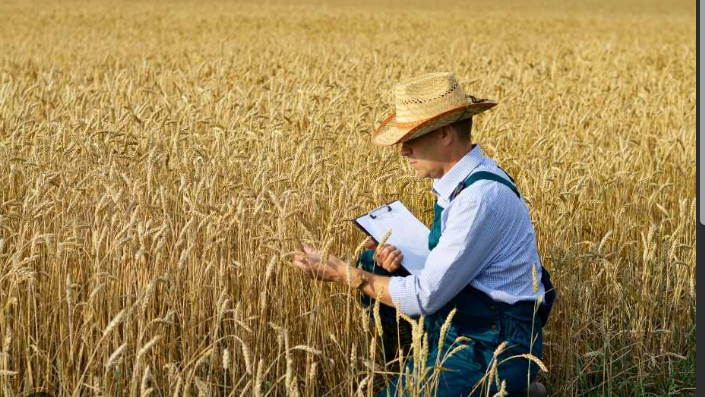
British Agriculture in a Time of War and Transition: Insights 2022–2025
Why UK farming matters more than everRussia’s full‑scale invasion of Ukraine has turned agriculture from a “quiet” sectorinto a core component of the UK’s national security and economic resilience.Disruptions to global trade in grain, fertilisers and energy have exposed thevulnerabilities of a country that produces only part of its own food and relies heavilyon imports for key inputs.This shock hit just as the UK was already undergoing a double transition: moving outof the EU’s Common Agricultural Policy into a new domestic support framework, andshifting towards a more climate‑neutral, resource‑efficient model of food production.The war has not changed the direction of travel, but it has significantly acceleratedthe pace of this transition. volumes slipped to multi‑year lows. This underlined how exposed farmperformance is to extreme weather and climate variability.Structurally, UK farmers receive a lower share of their gross receipts from publicsupport than the OECD average, leaving them more exposed to global market shocksbut also giving stronger incentives to improve productivity and market orientation. In response, government has announced a new Farming and Food Partnership Board,additional funding for collaborative projects, and increased support for investment incritical infrastructure such as water storage, glasshouses and storage facilities.Analysis suggests that, if scaled effectively, such investment could generatesignificant additional gross value added and support tens of thousands of jobs acrossthe food system.The Sustainable Farming Incentive (SFI) has become a key tool for steering thetransition. The SFI26 package simplifies previous schemes by reducing the number ofactions, dialling back incentives for simply taking land out of production and focusingsupport on practices that improve both nature and productivity – from soil health andwater management to climate resilience. The strategic signal is clear: the aim is nolonger “food or environment”, but “more food from better‑managed natural capital”. Looking across 2022–2025, several strategic insights stand out for policymakers,industry leaders and think tanks.1)Treat agriculture as security infrastructureFarming should be understood as part of the UK’s security architecture, not just asmall share of GDP. Policy needs to factor in risks from future wars, trade disruptionand energy shocks, and ensure that domestic production capacity and input supplychains are robust.2)Use the “war shock” as a transition acceleratorThe war in Ukraine has accelerated an inevitable shift towards a more market‑driven,technology‑enabled and environmentally aligned model of agriculture. Rather thantrying to restore the pre‑crisis status quo, policy should convert this shock into astructural upgrade of the sector.3)Design for dual profitability: economic and environmentalNew support tools like SFI26 should be designed to lift financial profitability andnatural capital at the same time. That implies developing metrics and incentives thatcapture both economic returns and environmental outcomes in a single performanceframework.4)Rebalance power along the supply chainThe resilience of farming depends not only on public payments but also on tradingconditions with processors and retailers. Transparent pricing mechanisms,fair‑dealing codes and better risk‑sharing instruments are needed to ensure farmerscapture a sustainable share of value.5)Align tax and investment policy with productivity and resilienceDebates around agricultural tax reliefs, including inheritance tax, offer an opening toshift incentives away from passive landholding towards investment in productivity,innovation and environmental performance. Tax and capital allowances should rewardfarms that actively build resilience.6)Build an agricultural data ecosystemThe UK needs a coherent agricultural data ecosystem – common standards, platformsand access rules – that allows farm, research and market data to be combinedsecurely. This would support better decision‑making on farm, unlock new financialproducts and improve system‑wide risk management. 7)Invest in human capital and skillsRaising productivity and resilience depends on people as much as on capital. Anational skills agenda for agriculture – covering data literacy, robotics, riskmanagement and export capability – should sit alongside infrastructure andinnovation funding as a core policy priority. Dr Liliia VoinychaAssociate Professor of Management, Stepan Gzhytskyi National University of VeterinaryMedicine and Biotechnologies of Lviv, UkraineAdviser, Society, War & Recovery Research Centre
British Agriculture in a Time of War and Transition: Insights 2022–2025 Read More »