
Governance & Institutions

screenshot

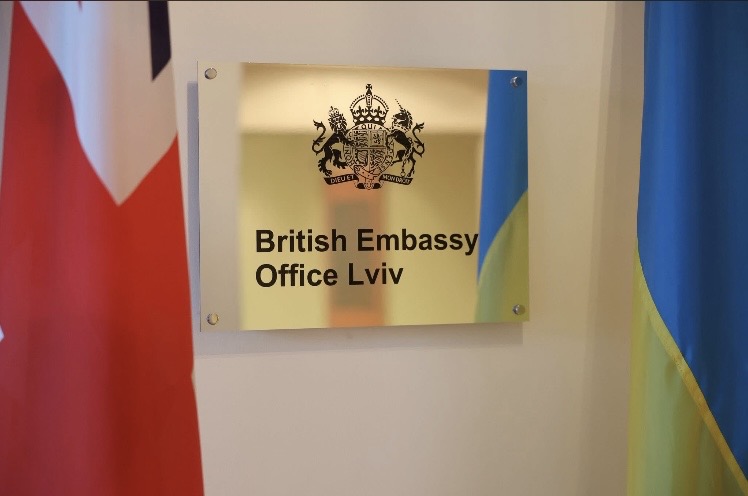
A British Embassy Office in Lviv: What It Means for UK-Ukraine Relations

The opening of a British Embassy Office in Lviv marks a meaningful moment in UK-Ukraine diplomatic relations – and one that carries particular significance for thiscentre.This week, British Ambassador to Ukraine Neil Crompton officially inaugurated thenew office alongside regional and local leaders. The decision to establish a permanentBritish diplomatic presence in western Ukraine is not a procedural formality. It is adeliberate signal of long-term commitment, rooted in the 100-Year PartnershipAgreement signed between the United Kingdom and Ukraine.Why Lviv mattersLviv occupies a distinctive position in wartime Ukraine. As Kyiv remains underconstant threat, the city has emerged as a critical hub for humanitarian coordination,innovation, and the preservation of institutional continuity. It hosts displaceduniversities, relocated businesses, and a concentration of civil society organisationsthat are quietly building the architecture of post-war recovery.A permanent British diplomatic presence here – rather than solely in the capital –reflects an understanding that Ukraine’s resilience is not centralised. It is distributedacross regions, cities, and communities. Engaging at that level requires physicalproximity, not just diplomatic correspondence from a distance.Human capital at the centreAmbassador Crompton’s visits during the inauguration period included meetings withveterans undergoing rehabilitation at UNBROKEN Ukraine – one of the country’sleading centres for the physical and psychological recovery of woundedservicemembers. That choice of itinerary is instructive. It signals that the UK’sexpanded presence in Lviv is concerned not only with political and economicdiplomacy, but with the human dimension of recovery: the people who will rebuildUkraine, and who will need sustained support to do so.This aligns directly with the research priorities of the Society, War and RecoveryResearch Centre, which examines how societies stabilise and reconstruct during andafter conflict – with particular attention to human capital, institutional capacity, andcommunity resilience.A note on personal significanceAs an adviser to a UK-based research centre with direct connections to westernUkraine, I find it difficult to view this development in purely analytical terms. Thisdiplomatic link creates concrete opportunities – for evidence-based policy advocacy, for research partnerships, and for ensuring that the experience of western Ukrainiancommunities informs the broader international conversation about recovery.The opening of this office is an investment in the people and institutions that willdetermine what Ukraine looks like in ten, twenty, and fifty years. It deserves to berecognised as such. Dr Olena RizenkoAssociate Professor of Administrative and Information Law, Lviv PolytechnicNational University, UkraineAdviser, Society, War & Recovery Research Centre

A British Embassy Office in Lviv: What It Means for UK-Ukraine Relations Read More »
1772971634331

Women in the World’s Armed Forces: What the Numbers Tell Us

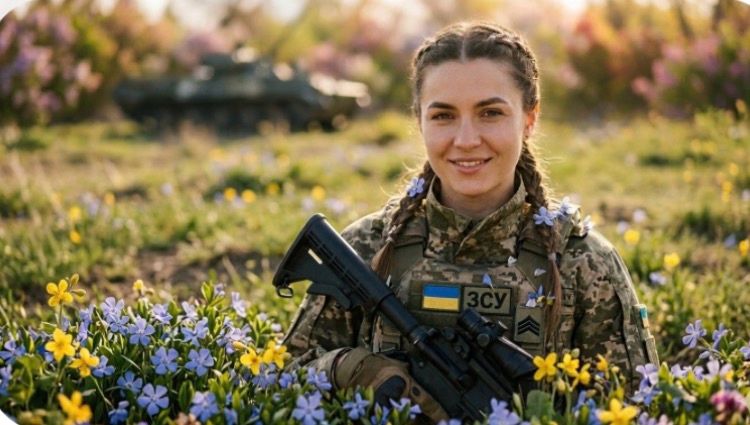
On International Women’s Day, it is worth setting aside the ceremonial and looking atthe data. The numbers describing women’s participation in the world’s armed forcesin 2025 tell a story that no speech can fully capture – one of structural change,societal transformation, and, in the case of Ukraine, history being made in real time.A global pictureMore than one million women currently serve in armed forces worldwide, across over190 countries. Twelve countries maintain mandatory military service for women; four Norway, Sweden, the Netherlands, and Denmark – have introduced fully equalconscription, placing women and men under identical obligations and opportunities.These are not symbolic gestures. They reflect a fundamental rethinking of who bearsresponsibility for national security.Regional variationThe regional picture reveals significant divergence. In North America, womenrepresent approximately 16% of armed forces on average – 17% in the United Statesand 15% in Canada – with all combat roles open to women since 2016. Across EMEAthe average sits at around 14%, though the variation is striking: Israel leads at 38%,Norway at 20%, France at 15%, and the United Kingdom at 11.7%. In the Asia-Pacific region the average drops to 8%, ranging from New Zealand at 18% to India atjust 0.5%.The United Kingdom: a moment for reflectionThe United Kingdom currently has 16,220 women serving in its Regular Forces,representing 11.7% of total personnel. The RAF Reserve records the highestconcentration at 23.8%. Yet recent years have seen a decline in female recruitment – atrend that deserves serious policy attention at a moment when defence capacity isunder renewed scrutiny across Europe.Ukraine: transformation forged in warNo country better illustrates the relationship between conflict and the role of womenin defence than Ukraine. In 2014, approximately 16,500 women served in the ArmedForces. By February 2022 that figure had reached 42,000. By January 2025 it stood atover 70,000 – representing approximately 23% of total military personnel, with 5,500women serving directly on the front line as snipers, drone operators, and unitcommanders.The social dimension of this shift is equally significant. Public support for womenserving in the Ukrainian military rose from 53% in 2018 to 80% in 2023. Eight in ten Ukrainians now believe a woman can command a combat unit as effectively as aman. This is not merely a statistical change – it is a measurable shift in nationalconsciousness, accelerated by the most acute security crisis in Europe since 1945.A note from the authorOn this day, the data matters. But behind every figure is a person who made a choiceoften under circumstances none of us would wish on anyone. This commentary iswritten with those women in mind: those whose names we are still learning, thosewho are no longer with us, and those who are holding their position right now. Dr Halyna HrynyshynCEO, Society, War & Recovery Research Centre

Women in the World’s Armed Forces: What the Numbers Tell Us Read More »