
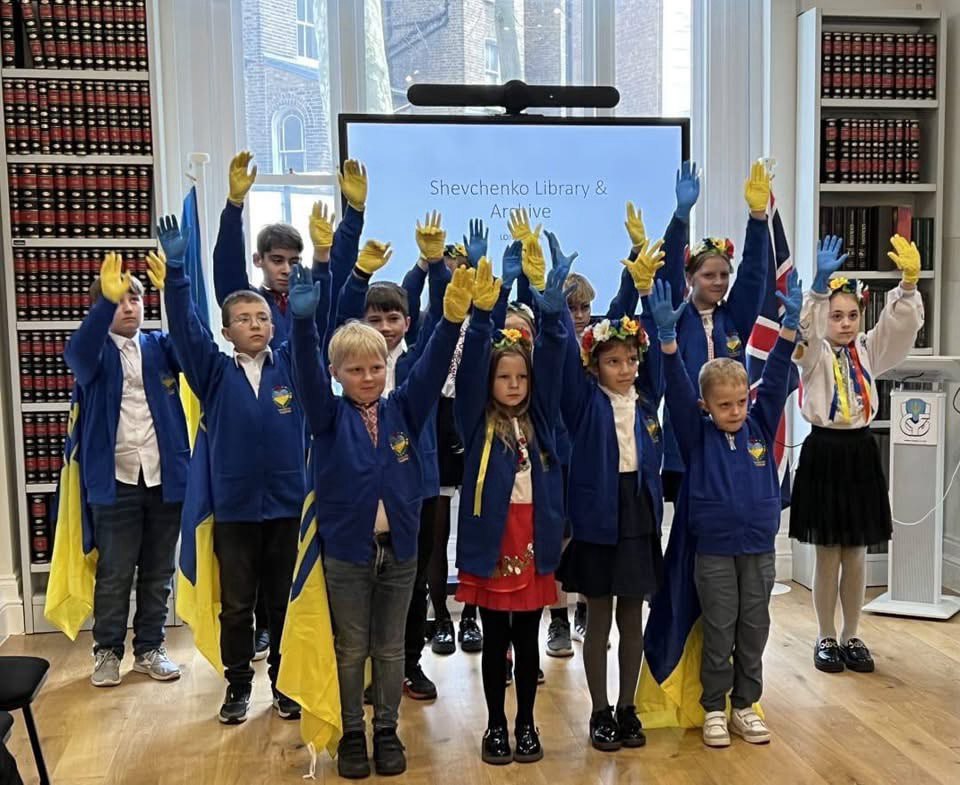
Ukrainian schools in the United Kingdom are far more than extra language classes.
They have become spaces where communities are formed, cultural memory is
preserved, and a new generation of Ukrainians is supported as they grow up between
two countries and two education systems. The story of these schools begins
immediately after the Second World War and continues especially vividly after 2022,
when tens of thousands of new Ukrainian families arrived in Britain.
Origins: Ukrainian schools after the Second World War
After the Second World War, a significant number of Ukrainian displaced persons
settled in the United Kingdom. In the late 1940s and early 1950s, the first Ukrainian
Saturday schools and preschool groups began to appear within the newly formed
communities. They became the foundation for the development of
Ukrainian‑language education in the diaspora.
The Association of Ukrainians in Great Britain (AUGB) played a major role in this
process. Ukrainian studies schools were opened at its branches in various cities –
Bradford, Bolton, Manchester, Nottingham, London, Wolverhampton and others.
Some of these schools existed for only a few years, while others worked for decades,
passing the language and culture on to the children and grandchildren of post‑war
emigrants.
One of the best‑known examples is St Mary’s Ukrainian School in London. It dates
back to the 1950s, developed under the patronage of AUGB, and later became one of
the most important Ukrainian educational centres in the country. Thanks to such
schools, the Ukrainian language and traditions did not disappear by the second or
third generation in the diaspora but remained alive and active.
After 2022: a new wave, new schools
Russia’s full‑scale invasion of Ukraine in 2022 radically changed the scale of the
Ukrainian presence in the United Kingdom. Along with tens of thousands of adults,
thousands of children arrived who needed not only housing and safety but also the
opportunity to continue learning in their native language, maintain a connection with
Ukraine, and find an environment where they felt they belonged.
Existing Ukrainian Saturday schools grew rapidly: pupil numbers doubled and
sometimes increased several times, additional locations, new streams and parallel
classes were opened. At the same time, new schools and educational centres began to
appear across the UK – within communities, churches, parents’ initiatives and
charitable organisations, including in online formats.
A typical example is the St Mary’s Ukrainian School network, which expanded after
2022 to several sites in different towns, with the number of pupils reaching hundreds
and even more than a thousand. Similar schools operate in London, Northampton,
Glasgow, Edinburgh and many other cities, welcoming both children from the new
wave of displaced Ukrainians and those from families of the “old” diaspora.
In this way, Ukrainian schooling in the UK has evolved into a broad network of
Saturday and Sunday schools, online platforms and clubs that cover different age
groups – from preschool children to older teenagers.
Saturday and Sunday schools: two formats, one mission
The Ukrainian community in the UK develops two main formats of out‑of‑school
education: Saturday schools and Sunday schools.
Saturday schools usually operate for several hours every Saturday. They have a more
structured curriculum similar to a “small Ukrainian school”: with timetables, themed
lessons, some homework, tests and final grades. Saturday schools are the ones most
often undergoing verification and recognition procedures so that learning outcomes
can be accepted in Ukraine.
Sunday schools usually operate at Ukrainian churches – Greek‑Catholic and
Orthodox parishes. They combine religious education and catechesis with Ukrainian
studies subjects. In Sunday schools, more attention is often paid to spiritual and
cultural aspects, celebrations, shared prayer and volunteering, while pupils also study
the Ukrainian language, history and traditions.
These two formats do not compete but complement each other: Saturday schools
provide systematic Ukrainian studies education, while Sunday schools root children
in a community connected to the parish and spiritual life.
What children study: lessons and curricula
The curricula of Ukrainian Saturday and Sunday schools in the UK focus on subjects
that are critically important for preserving identity but are not present in the British
school programme. Typically, children are offered lessons in:
Ukrainian language: speaking, reading, writing, grammar
Ukrainian literature: fairy tales, short stories, poetry, adapted works of classics
and contemporary authors
History of Ukraine: from ancient times to modern history, with special
emphasis on the twentieth century, the struggle for independence and the
current war
Geography of Ukraine: regions, cities, natural zones, symbols and cultural
features
Ukrainian traditions and culture: calendar and family holidays, songs, folk
costumes, crafts, customs
Basics of Christian ethics or religious education (especially in schools attached
to churches)
Creative disciplines and clubs: choir, folk and modern dance, visual arts,
theatre studios, music and more
In senior classes some schools offer advanced Ukrainian language and literature,
research work in Ukrainian studies and participation in competitions and projects. In
this way the programmes do not duplicate British schooling, but complement it and
maintain a full‑fledged Ukrainian educational context for the child.
Verification of schools and recognition of learning outcomes in Ukraine
It is crucial that a number of Ukrainian schools in the United Kingdom are not only
community initiatives but also have an officially recognised educational status. The
Ministry of Education and Science of Ukraine has gradually developed mechanisms
that make it possible to:
verify Ukrainian schools abroad that meet criteria for curricula, teacher
qualifications and student performance tracking
approve the curricula of these schools in line with Ukrainian educational
standards
transfer learning outcomes (grades in Ukrainian language, literature, history
and other subjects) to the student’s official records if they return to or continue
their education in Ukrainian institutions
One example is the Ukrainian St Mary’s school in Northampton, which has obtained
the status of a certified educational centre with a programme approved by Ukrainian
education authorities. Pupils sit official examinations there, and their results are
recognised by schools in Ukraine. This ensures continuity of education and gives
parents confidence that their children’s learning in the UK is not “lost” from the
Ukrainian system.
Recognition of learning outcomes also strengthens the moral and professional
importance of teachers’ work in diaspora schools, bringing their status closer to that
of colleagues in Ukraine.
The teachers’ community and professional development
Ukrainian schools in the UK rely on their teachers – both as professionals and as
community leaders. The vast majority of them work on a voluntary basis or receive
only symbolic remuneration that does not reflect the scale of their work. They are
often:
teachers, educators and academics from Ukraine who have found themselves in
the UK because of the war and want to continue their profession
representatives of the “old” diaspora who have experience of pre‑war or
post‑war Ukrainian schooling and pass on traditions to the next generations
young specialists and students who assist in organising the educational process,
extracurricular clubs, celebrations and projects
To support the quality of education and exchange of experience, the Association of
Ukrainian Teachers in the UK organises professional events for educators. In 2025
two important conferences took place – in April and in October. They addressed:
teaching methods for Ukrainian language and literature in an
English‑speaking environment
approaches to working with children who have experienced the trauma of war
and forced displacement
practical steps for the recognition of learning outcomes in Ukraine and
coordination with schools and universities
joint curriculum development, sharing teaching materials and building a
common educational space for Ukrainian schools across the country
These events transform scattered schools into a single network in which teachers do
not feel isolated but instead have professional support, inspiration and the opportunity
to influence the development of Ukrainian‑language education in the diaspora.
School as a community hub: why creating them is critically important
Ukrainian schools in the United Kingdom are not just another educational service but
the heart of the community. They perform several key functions at once.
First, they are spaces for preserving language and culture. For children who live their
daily lives in English, a Ukrainian school becomes a place where the native language
is heard, valued and actively used. Here children learn to sing Ukrainian songs, read
Ukrainian stories and understand the history of their own country, not only general
“European” or British history.
Second, they provide psychologically safe spaces. For many displaced children,
school is one of the few places where their experience of war, relocation and
separation from home is met with understanding and empathy. They meet peers with
similar stories, can talk about Ukraine without fear or misunderstanding, and feel that
they are not “different” but belong.
Third, Ukrainian schools connect generations. Children from the new wave of
displaced families, descendants of the post‑war diaspora and teachers who arrived in
different decades all meet under one roof. Together they create a shared story:
preparing celebrations, charity fairs, commemorations, and fundraising events to
support Ukraine.
Fourth, schools become a bridge between Ukrainian and British education systems.
Through partnership projects, joint events and “twin schools” programmes, Ukrainian
Saturday schools integrate into the local context, promote mutual understanding and
help tell British society the truth about Ukraine and its culture.
Conclusion: every new school is an investment in the future
The experience of the post‑war diaspora and the new wave after 2022 makes one
thing clear: without Ukrainian Saturday and Sunday schools, the community would
quickly assimilate, losing its language, memory and sense of unity. The existence of
these schools not only preserves identity but also passes it on to children in a lively,
modern form.
Every new Ukrainian school in the United Kingdom is:
an additional chance for a child not to lose connection with Ukraine
a space of support for a family that has found itself far from home
an opportunity for a teacher to fulfil their vocation
a new hub of self‑organisation and solidarity among Ukrainians abroad
This is why establishing, supporting, verifying and developing Ukrainian Saturday
and Sunday schools in the UK is not a secondary task but a strategically important
investment in the future of the Ukrainian community – and of Ukraine itself.
Dr Halyna Hrynyshyn
CEO, Society, War & Recovery Research Centre
Natalia Kuchmak
Director of the Ukrainian school, Talented Children of Ukraine, Malvern